
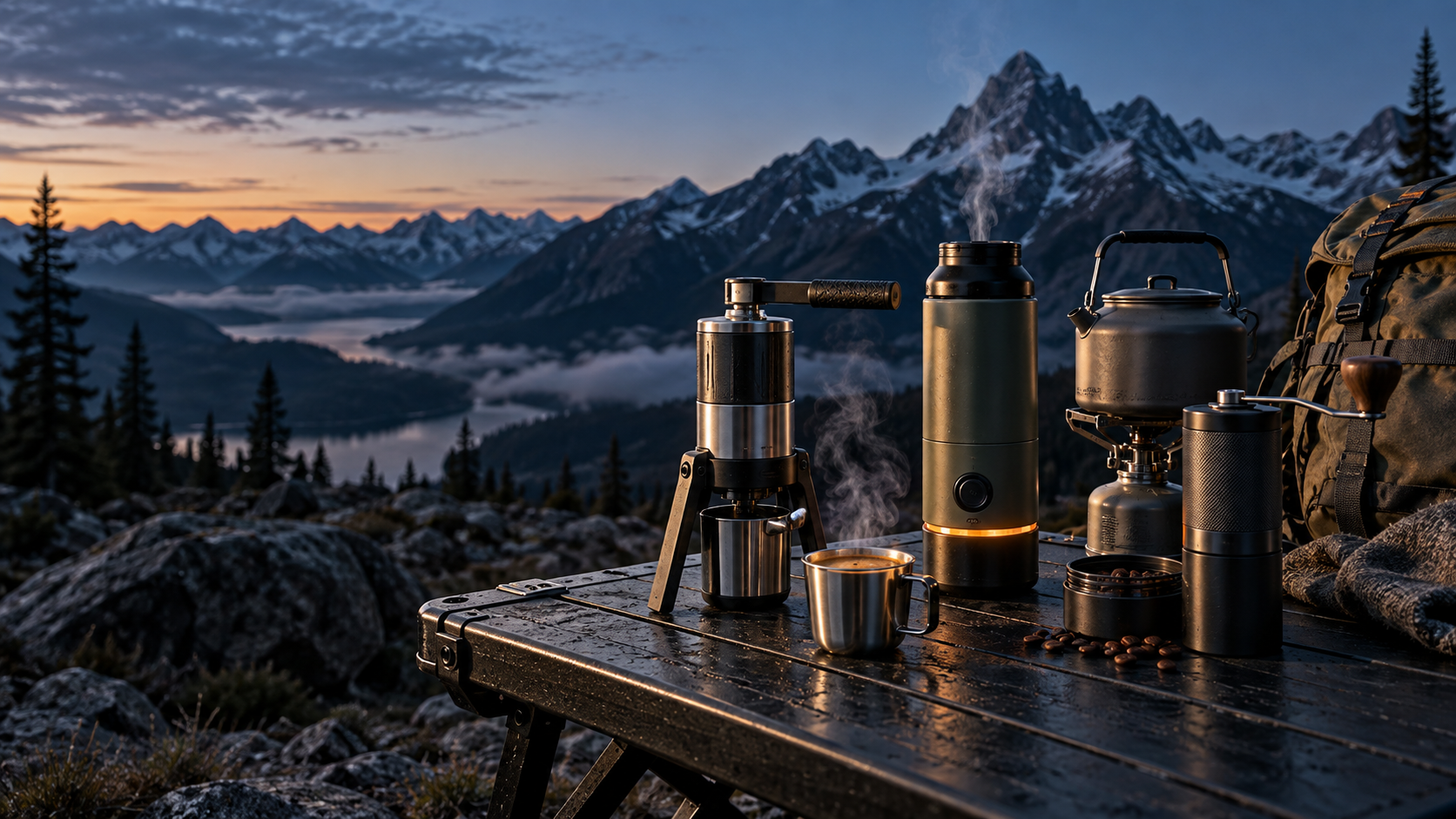
The espresso machine stays home. Your standards travel. On a hotel desk or beside a camp stove, the useful question is not which brewer promises the most pressure. It is whether you already have hot water.
The verdict up front: choose a manual maker if a kettle, stove, or insulated bottle is already part of the trip. The Wacaco Nanopresso is the forgiving option; the Wacaco Picopresso gives an experienced home barista more control. If heating water is the problem you need the machine to solve, the OutIn Nano earns its extra weight with a built-in heater and pump.
Start with heat, not pressure
Manual brewers are small because they leave 2 jobs to you: heating the water and creating pressure by hand. Battery models bring those jobs inside the body. That makes them more self-contained, but also heavier and dependent on a charge.
Do not buy by the largest bar number on the box. Maximum pump pressure is not a score for the finished shot. Grind, dose, water temperature, basket design, and technique still decide what reaches the cup.
Nanopresso for the simpler manual routine
Wacaco says the Nanopresso weighs 336 g, carries an integrated cup, and uses an 8 g basket in its standard setup. Its pressurized basket is more tolerant of pre-ground coffee than an open, enthusiast-style basket. That makes it the sensible manual pick when convenience matters more than controlling every part of the extraction.
The limitation is plain: it does not heat water. Its small standard dose also makes a shorter, lighter shot than some espresso drinkers expect. An independent Tom’s Guide test found it capable of credible espresso after dialing in, while still placing the Picopresso ahead for drink quality.
Picopresso when the shot is the hobby
The Picopresso is nearly the same weight, but its 52 mm open basket holds 18 g of coffee. You grind fine, distribute, tamp, preheat, and pump. In return, you get far more control over a double shot.
That control is also the catch. A mediocre grinder or rushed preparation shows up immediately, and the loose tools add setup and cleanup. Pack it for a hotel, cabin, or campsite where making espresso is part of the morning. It is harder to justify on a hike where every object needs more than 1 purpose.
OutIn Nano when hot water is unavailable
OutIn says the Nano weighs 670 g, accepts ground coffee and compatible capsules, and heats room-temperature water in about 200 seconds. The company rates it for up to 5 cold-water brews per charge under its test conditions.
Independent results are less tidy. Coffee Chronicler reported 2 to 3 self-heated shots per charge, while another hands-on review reached 4. Treat 5 as a best-case claim, not a trip plan. The Nano makes sense for road trips, job sites, and hotel stays where a socket appears often enough to recharge it. A manual brewer remains the safer bet for longer trips built around a stove.
Pack the whole espresso system
Portability is not the brewer alone. Count the grinder or pre-ground coffee, heat source, cup, rinse water, and a place for wet grounds or used capsules. If that collection feels absurd beside a thermos, believe the feeling.
Who should skip a portable espresso maker
Skip this category if hotel coffee, instant, or a filled travel mug already does the job. Weight-conscious hikers will usually get more value from a simpler immersion brewer. The Picopresso is also a poor fit without an espresso-capable grinder, while a self-heating machine is wasteful if hot water is already in the kit.
Choose the heat source first. The brewer becomes obvious after that.
Sources
- Wacaco Nanopresso specifications
- Wacaco Picopresso specifications
- OutIn Nano specifications and internal test notes
- Coffee Chronicler portable espresso tests
- Tom’s Guide Nanopresso review
- Brew Coffee Home OutIn Nano review
More field guides
Research the next purchase
Choose the room or problem you are working on next.
Browse all guides