
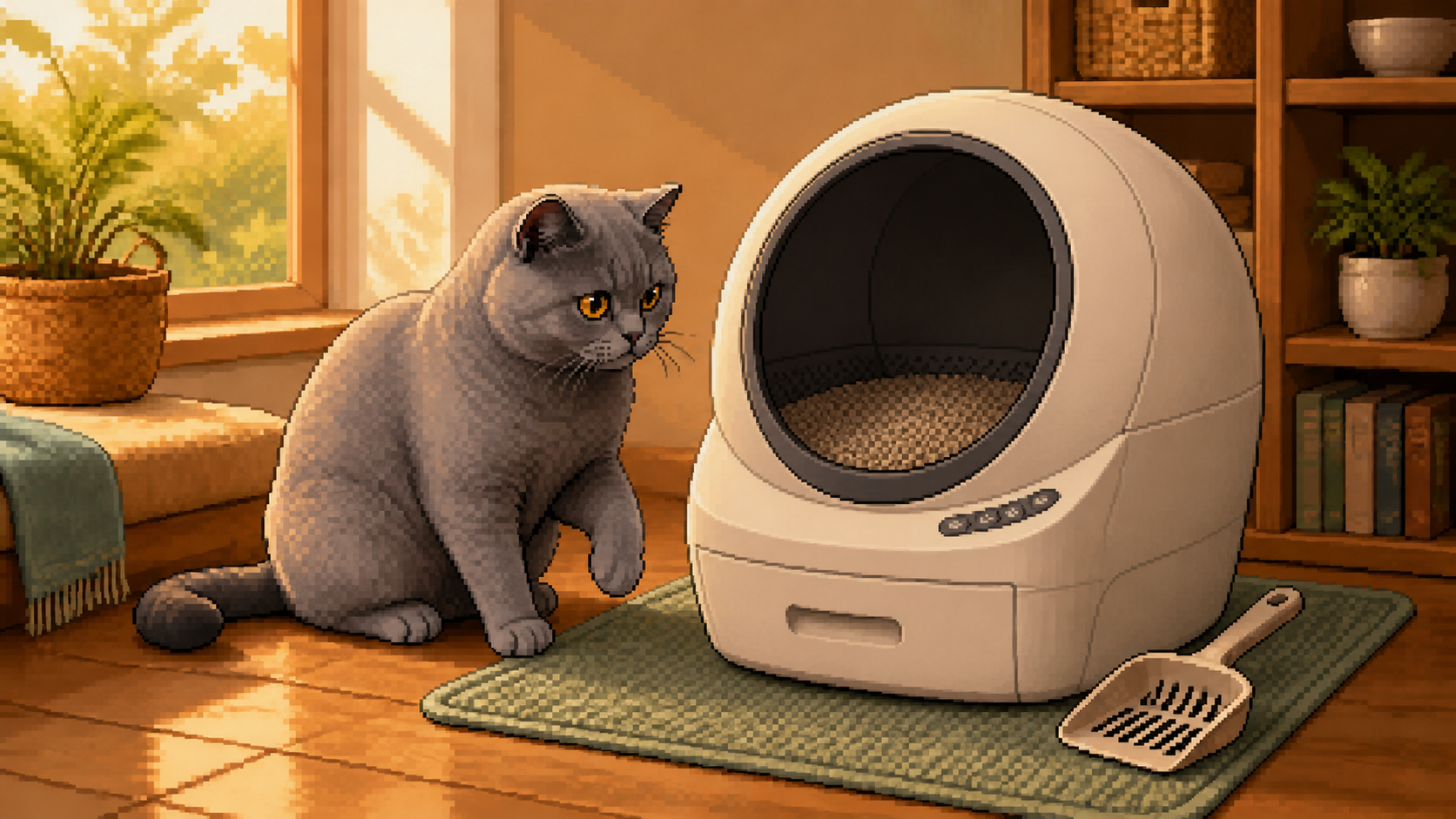
I have cleaned enough litter boxes by hand to understand the appeal of never scooping again. The smell, the scattered grit, the clump that breaks at exactly the wrong moment, none which inspires loyalty to tradition.
I have not personally owned an automatic litter box, though, so this is not a disguised hands-on review. It is a practical look at what current product documentation and owner reports agree on: self-cleaning litter boxes can remove the daily scoop, but they do not remove litter-box maintenance.
The best one is not the machine with the longest feature list. It is the machine your cat will use, your litter will cooperate with, and you will still be willing to clean after the honeymoon period ends.
The subscription question is refreshingly simple. The Litter-Robot 4, Neakasa M1, and PETKIT Purobot can all perform their core cleaning job without a required monthly plan. Some brands sell optional cloud history or expanded app insights, but you do not need to keep paying for the box to cycle.
Quick comparison
| Model | Best fit | What still needs your attention | Subscription situation |
|---|---|---|---|
| Litter-Robot 4 | Buyers who want the longest track record | Stuck clumps, sensor care, drawer and globe cleaning | Core features remain free; deeper history is optional |
| Neakasa M1 Plus | Large or cautious cats that prefer an open top | Grate jams, odor control, waste-bin cleaning | No required plan for core operation |
| PETKIT Purobot Max Pro 2 | Owners curious about camera-based tracking | Litter compatibility and unreliable pet identification | Core cleaning and basic data are free; some cloud video extras may cost more |
My strongest general recommendation is the Litter-Robot 4 because it has the most established owner base and repair ecosystem. The Neakasa M1 is the more interesting choice for cats that reject enclosed spaces. I would treat the PETKIT Purobot’s recognition features as a bonus experiment, not the reason to buy the box.
Litter-Robot 4: the established choice, with some scraping
The Litter-Robot 4 is the familiar name in this category. Its enclosed globe sifts clumps into a sealed drawer, and the app tracks basic visits, weight, litter level, and waste level without requiring a paid membership. Whisker now offers an optional plan for longer history and expanded insights, but the features that originally came with the box remain free.
That distinction matters. A litter box should not stop doing its main job because you canceled an analytics package.
The recurring complaint in our owner scan was clumps sticking to the rubber liner and riding back into the clean litter. That turns “never scoop again” into “scrape the globe occasionally,” which is still less work than daily scooping but not quite the promised vanishing act. Owners have also reported weight-sensor hiccups and Wi-Fi drops.
Litter choice appears to make a real difference. Whisker recommends standard-weight, fast-clumping clay litter. Loose-clumping, non-clumping, newspaper, and wood-pellet litters are poor fits, while some pale crystal litters can interfere with level sensing.
Best for: someone who wants a proven automatic litter box, has room for an enclosed unit, and values easier access to parts and support.
Think twice if: your cat strongly prefers an open box, dislikes confined spaces, or is large enough that any enclosed globe feels like an airplane bathroom.
Neakasa M1: the open-top alternative
The Neakasa M1 takes a friendlier-looking approach for cats that distrust enclosed boxes. Its open top gives larger cats more room and lets cautious cats see what is around them. That design may make the transition easier, especially if your cat already uses an uncovered litter box.
The tradeoff moves from cat comfort to waste handling. Owners in our scan described clumps jamming near the grate and odor lingering despite regular cleaning. Those reports do not prove every M1 will behave the same way, but they identify the part of the machine I would watch closely during the return window.
Neakasa recommends fast-clumping granular litter such as bentonite or mineral litter. It does not recommend non-clumping, loosely clumping, newspaper, or wood-pellet products. Again, the litter is not a minor accessory here. It is part of the mechanism.
The M1 Lite had a relatively small review base when we gathered the owner reports, so I would not treat a handful of complaints as a final verdict. I would treat them as a test plan: use your preferred litter, watch how completely clumps clear, and pay attention to odor before the return period closes.
Best for: larger cats, cautious cats, and households that want an open-top self-cleaning litter box.
Think twice if: your main goal is the longest possible track record or you are unwilling to experiment with litter type.
PETKIT Purobot: useful tracking, imperfect recognition
The PETKIT Purobot line leans hardest into cameras, pet recognition, and bathroom data. That can be useful in a multi-cat home, where knowing which cat used the box may help you notice a change sooner.
It is also the feature I would trust least.
Owners in our scan reported scoop failures with some litter types, a cat losing its saved identity after a small weight change, and a passing person being identified as a cat. The verified review pool for the model we examined was small, so these are warning signs rather than a universal judgment.
PETKIT describes its basic pet-data service as free. Camera-equipped models may offer optional paid cloud playback, but core cleaning does not depend on a monthly plan. Check the exact model’s current free and paid features, because the Purobot family now includes several versions with different camera and litter systems.
Recognition data can be interesting. It is not a diagnosis. If your cat’s bathroom frequency, posture, or output changes, look at the cat and the box yourself and call your veterinarian when the change is concerning or persistent.
Best for: owners who enjoy app data and understand its limits.
Think twice if: pet recognition is the main reason you are buying, or you want the simplest machine possible.
Litter quality matters more in an automatic box
With a traditional box, a weak clump is annoying. You chase the pieces with the scoop and question your purchasing decisions.
Inside a self-cleaning litter box, that same weak clump can smear across a liner, break apart during a cycle, fall through a screen, or remain in the clean bed. The machine repeats the result every time, with admirable consistency and terrible judgment.
Look for litter that:
- Clumps quickly before the cleaning cycle begins
- Forms firm clumps that survive movement
- Produces relatively little dust
- Fits through the model’s sifting screen
- Is explicitly allowed by the manufacturer
Do not assume your current litter will work just because it says “clumping” on the bag. Start with a small amount, adjust the cycle delay if the model allows it, and inspect the results after several uses.
What self-cleaning still leaves for you
An automatic litter box changes the rhythm of the chore. It does not erase it.
You will still need to:
- Empty and reline the waste drawer
- Add fresh litter
- Wipe sensors and exposed surfaces
- Remove stuck clumps
- Deep-clean parts that contact waste
- Check for leaks, unusual smells, and changes in your cat’s habits
You may also need branded liners, filters, deodorizing supplies, or replacement parts. Some generic substitutes work, but check whether they affect sensors or warranty coverage before stocking up.
The honest buying question is not, “Will I ever touch litter again?” You will. The better question is, “Would I rather do a short weekly reset and an occasional deep clean than scoop every day?”
For many people, the answer is an enthusiastic yes.
Which cats should keep a traditional box for now?
Wait before switching if your cat is already avoiding the box, suddenly changing bathroom habits, or showing signs of discomfort. A new machine adds noise, movement, and another variable when you need a clear picture of what is happening.
Automatic boxes can also be a poor fit for very young kittens below the manufacturer’s weight threshold, cats with limited mobility, cats that spray high, or cats that panic around moving equipment. Follow the model’s kitten instructions and keep the old box available during the transition.
Never force the introduction. Set up the new box without running automatic cycles at first, let your cat investigate it, and keep the familiar box nearby until the new one is being used reliably. Your cat did not read the product page and feels no obligation to respect the investment.
Final recommendation
Choose the Litter-Robot 4 if you want the most established all-around option and your cat is comfortable with an enclosed box. Choose the Neakasa M1 if an open top and extra room are more important than a long track record. Choose a PETKIT Purobot only if you value its camera features while remaining comfortable treating recognition and health insights as imperfect signals.
None of these requires a subscription for basic cleaning. More importantly, none is truly maintenance-free. A good automatic litter box does not eliminate care; it trades daily scooping for less frequent, slightly more mechanical housekeeping.
That is not magic, but after years of holding a litter scoop, it can still look pretty good.
How we researched this guide
This guide combines current manufacturer documentation with owner reports gathered in an August 2026 community scan. It is not based on personal ownership or laboratory testing. Review depth was much stronger for the Litter-Robot 4 than for the Neakasa M1 Lite and the PETKIT Purobot model in the scan, so complaints about the latter two are presented as issues to test rather than settled verdicts. Product features, app plans, and model names can change; verify the current terms and return window before buying.
More field guides
Research the next purchase
Choose the room or problem you are working on next.
Browse all guides