
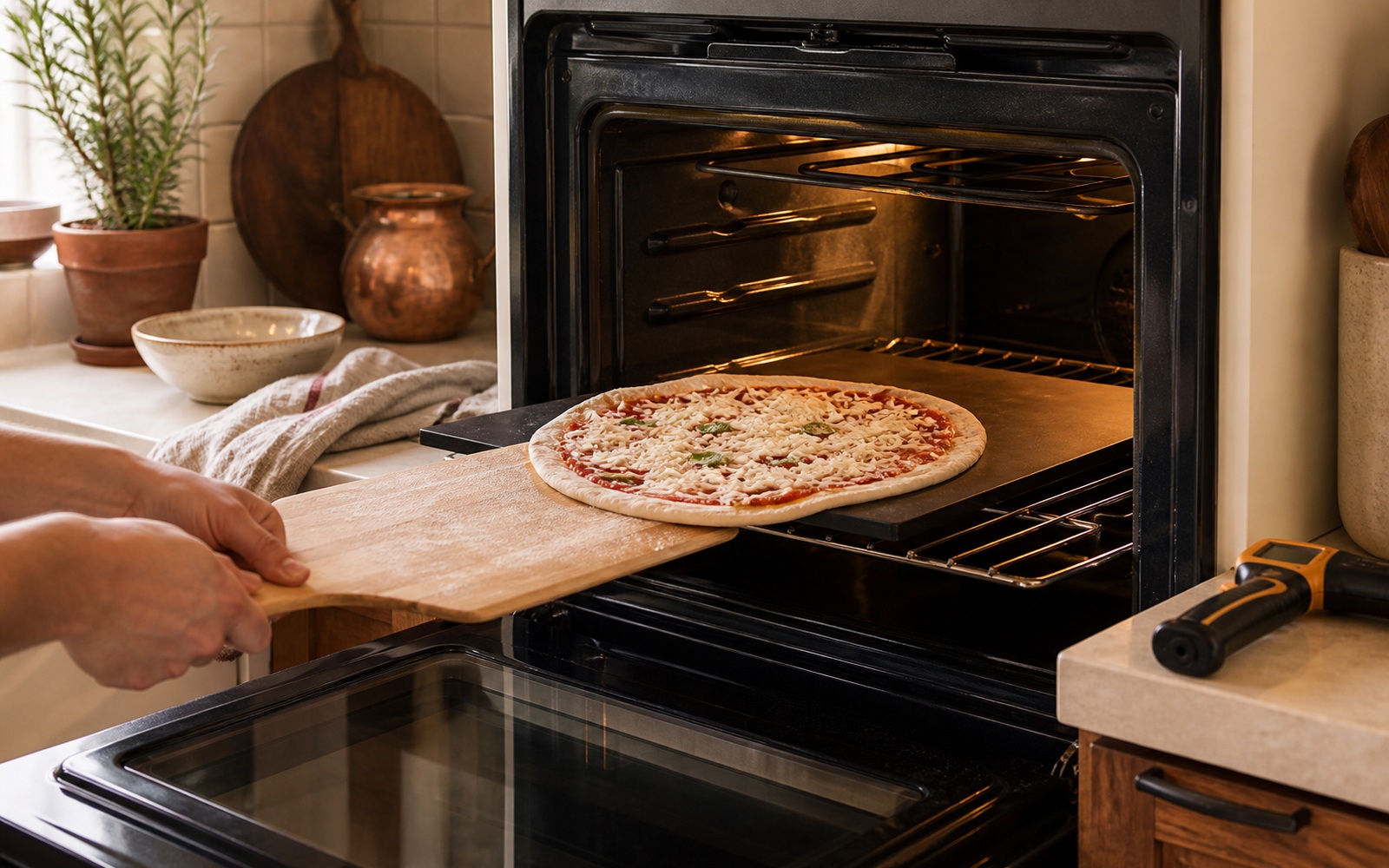
Some steel pizzas fail before the dough lands. The oven beeps, the air is hot, and the dense slab on the rack is still catching up, but the hunger for pizza has the potential to be stronger than our patience.
The verdict up front: give a quarter-inch steel 45 to 60 minutes at your oven’s highest setting, start on an upper-middle rack, and use the broiler only when the top needs help. The preheat is the recipe. Everything after that is adjustment.
1. Pizza steel preheat: trust the slab, not the beep
Set the steel on an upper-middle rack, with enough room above it for the rim to rise and the broiler to work. Preheat at the highest setting for 45 to 60 minutes. The beep tracks oven air, not the center of a dense slab, and that gap is the biggest source of a pale first base. If you own an infrared thermometer, record the steel temperature when a pizza works and use that number on the next bake. Consistency matters more than matching the oven dial exactly.
2. Stretch gently and top with restraint
Let cold-fermented dough lose its refrigerator chill before shaping. Press the center by hand, keep the rim intact, and top with restraint. A wet, overloaded pie steams the base and erases the advantage you just preheated for. Dust the peel lightly with semolina or flour, build quickly, then give the peel a small shake before launch. If the pizza does not move now, it will not move at the oven door.
3. Bake fast, then finish under the broiler
Baking Steel’s method puts a thin round pizza at roughly 4 to 6 minutes on a fully heated 550F surface. Check the underside before the clock decides for you. If the base is ready while the cheese and rim still look pale, turn on the broiler for a short finish and keep the oven in sight. If the top finishes first, move the steel down one rack on the next bake. Move the pizza to a cooling rack for a minute so trapped steam does not soften the crust.
4. Give the steel time between pies
The slab gives up heat to each pizza and needs to recover, so budget about 15 minutes between launches instead of treating the second pie like the first. Close the door as soon as the pizza comes out. An infrared thermometer makes the decision simple: launch again when the center returns to the temperature that worked before. A single quarter-inch Artisan Steel is enough for a family bake without turning the oven rack into a shelf of heavy metal.
5. Keep it dry so it lasts
Steel is tough, but moisture still wins. Scrape off baked flour and cheese after the slab cools. If you use water, dry it completely and wipe on the thinnest film of oil so the next preheat does not fill the kitchen with smoke. The slab stays hot long after the oven is off, so leave it in place until it is fully cool.
Who should skip most of this
None of this is worth the fuss if your current stone already makes pizza you enjoy and you bake only now and then. It is also the wrong surface for a sweet dough left unattended, because honey or sugar can brown the base before the top catches up. Lower the oven temperature, move the steel down, or keep that formula on stone. And if you want true Neapolitan char, that wants an outdoor oven, not a more aggressive launch in a 550F box.
Treat the first bake as practice, not a final verdict on the steel. Once you know the rack, surface temperature, and finish that balance your oven, make note of it. If you are still deciding between tools, compare the pizza steel with an Ooni and a bare home oven. The repeatable setup is the upgrade.
More field guides
Research the next purchase
Choose the room or problem you are working on next.
Browse all guides