
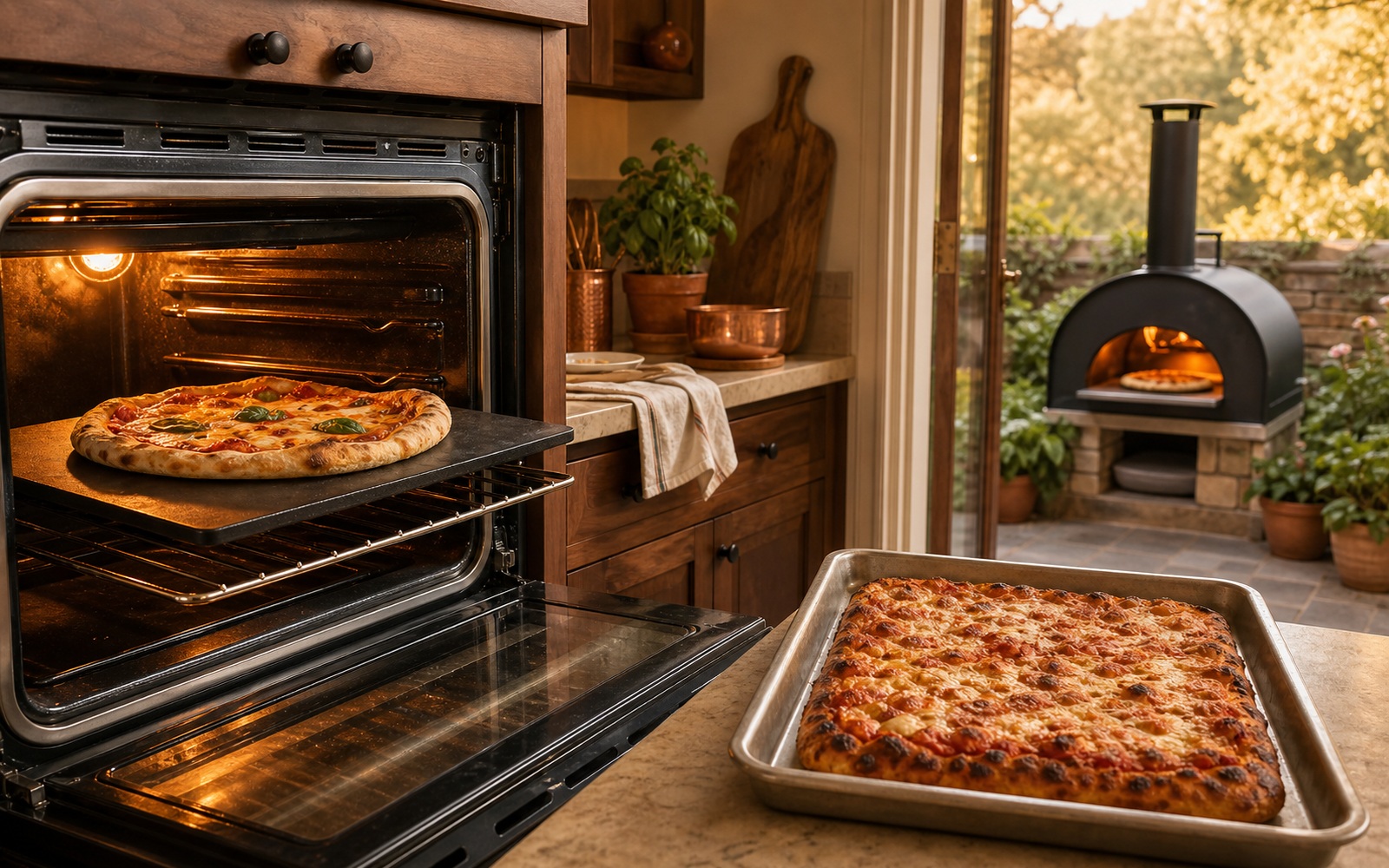
Cast iron taught me the pizza-steel argument before I owned a steel: a hot oven means little if the surface under the dough cannot deliver that heat fast enough. The pizza stone was a fun experiment. Steel is the same lesson pushed further.
The verdict up front: for most people making round pizza in a home oven, a pizza steel is the highest-return upgrade. An Ooni makes sense when high-heat pizza becomes the hobby, not merely dinner. Keep the bare oven if pan pizza is already giving you what you want.
1. The base is what fails, and heat from below is the lever
Home pizza often goes wrong underneath. The cheese and rim brown while the base stays pale because a sheet pan transfers heat gently and a stone transfers it more slowly than steel. Bottom heat is the biggest lever here. Rank every option by what it does to the base before you compare maximum temperatures.
2. A pizza steel fixes the base without a new appliance
A pizza steel is a dense slab that sits on the rack and moves stored heat into the dough much faster than stone. Baking Steel’s home-oven method calls for a fully preheated 550F surface and a roughly 4 to 6 minute bake. A quarter-inch steel is the useful middle ground for most kitchens. The 16 by 14.25 inch Artisan Steel gives you more launch room but may crowd a smaller oven. The 13 inch square Hans Grill fits more easily but gives you less margin around a wide pie. Measure the rack and leave about 1 inch around the slab for airflow.
3. The Ooni clears a ceiling your oven cannot
Home ovens stop near 550F. The gas Ooni Koda 2 Pro is rated to reach 950F and bake a Neapolitan-style pie in about 60 seconds, with the spotted char and soft rim a kitchen oven cannot reproduce. If that style is the goal, no steel closes the gap. The trade is a second appliance, outdoor space, fuel, and a new set of variables. Turning, flame control, and wind become part of dinner.
4. The trade the spec sheets hide: recovery between pies
A steel spends stored heat on the first pizza and needs time to recover. Owners commonly allow about 15 minutes before the next launch, especially with a quarter-inch slab. An Ooni stone also loses surface heat between pies. Neither option is automatically a party machine, and people feeding a crowd often par-bake or reheat instead of promising everyone a fresh 90-second turn.
Budget by tier
Starter: Use the oven and pan you own. A full preheat, better rack placement, and a short broiler finish can improve the top without buying anything.
Professional: Add a quarter-inch steel. It delivers the largest change to a round pizza for a fraction of the commitment of an outdoor setup.
Studio: Choose a dedicated outdoor oven when high-heat pizza is a repeatable practice and you want direct control over flame, turns, and char.
Who should skip most of this
None of this applies if you make the occasional pan or Detroit pizza and are happy with it, because a bare oven and pan already suit that style. A heavy steel is also hard to justify if pizza appears a few times a year. And if Neapolitan is the only pizza you care about, weigh the Ooni first. A steel teaches heat management, but it does not turn a 550F oven into a 900F one.
Rank this by the pizza you make on an ordinary Tuesday. Steel is the everyday answer for most round pies, and this pizza-steel setup guide shows how to balance the base and top. The Ooni earns its space when the fire, the turn, and the 90-second bake are part of what you came for.
Sources
- Ooni. Koda 2 Pro. Product specifications.
More field guides
Research the next purchase
Choose the room or problem you are working on next.
Browse all guides