
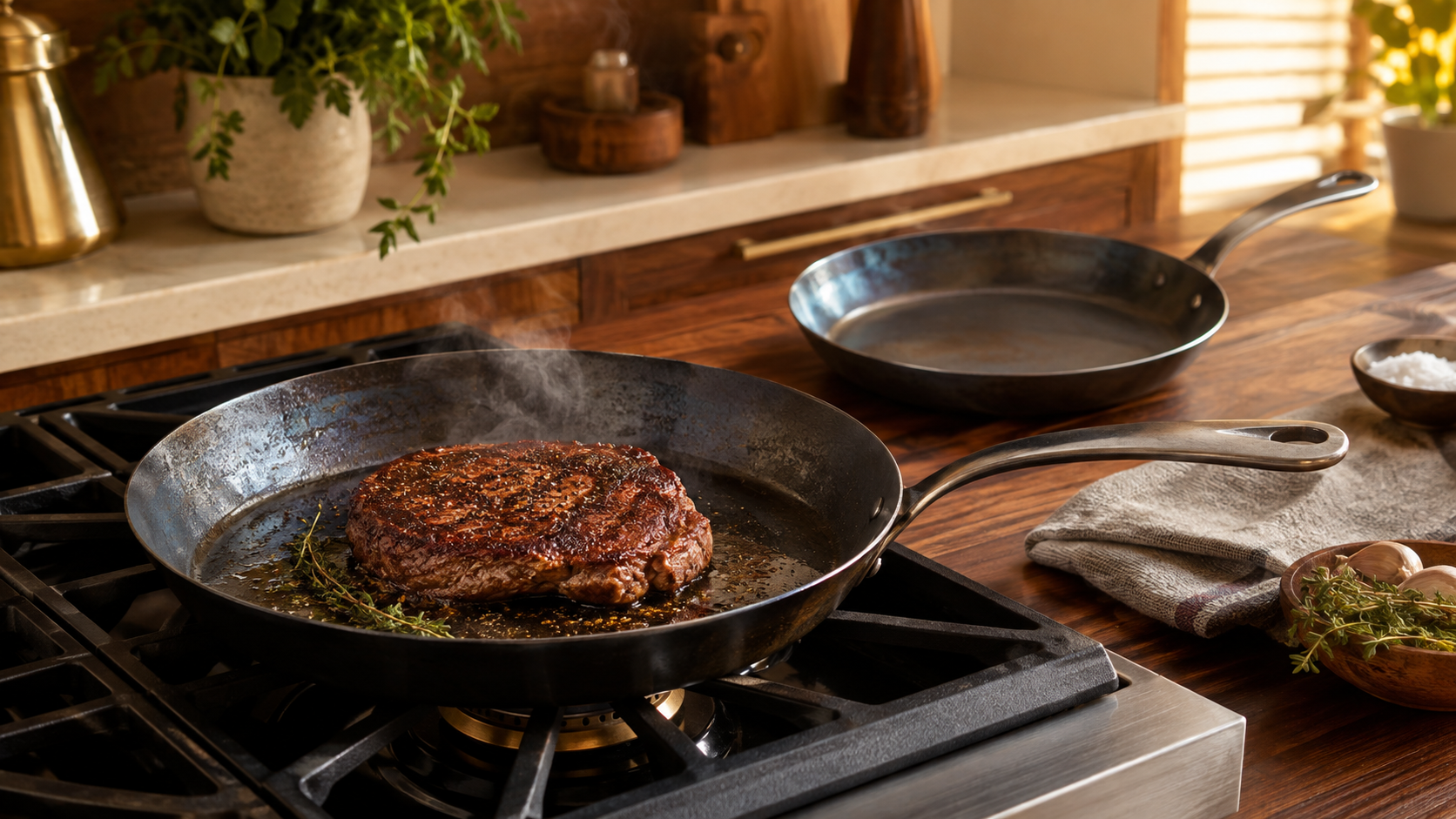
The easiest carbon steel mistake is buying the pan that looks most serious. Thick steel, a restaurant pedigree, an iron handle long enough to duel with. Then you discover that the skillet is miserable to lift and leave it in the cabinet.
A carbon steel pan only becomes good after you use it. Weight, balance, usable cooking area, and handle design therefore matter as much as raw searing power.
The short answer: the de Buyer Mineral B Pro is the best all-around choice if you want thick steel and a truly oven-safe handle. The OXO Obsidian is the easiest first pan because it arrives pre-seasoned and includes a removable silicone grip. The Lodge 12-inch is the value pick for a grill, campfire, or rough daily use. The Matfer Bourgeat is the rivetless restaurant workhorse—but it is much heavier than its reputation suggests.
The picks at a glance
| Best for | Pick | What makes it different | Main compromise |
|---|---|---|---|
| Best overall | de Buyer Mineral B Pro, 11-inch | Thick steel, comfortable cast-stainless handle, full oven use | Heavy; beeswax must be removed |
| Best for beginners | OXO Obsidian, 10-inch | Pre-seasoned, removable silicone sleeve, easy handling | Less heat mass than heavier French pans |
| Best value/outdoor pan | Lodge, 12-inch | Foundry-seasoned, tough, made for stove, grill, or fire | Large and heavier than a beginner may expect |
| Best rivetless workhorse | Matfer Bourgeat, 11 7/8-inch | Welded handle, no interior rivets, commercial build | About 4.9 pounds in the current 11 3/4-inch specification |
| Best compact lightweight pick | Misen Pre-Seasoned, 8-inch | 2.1 pounds, pre-seasoned, 500°F oven rating | Too small to be a one-pan kitchen |
| Premium alternatives | Made In / Mauviel M’Steel | High-heat construction and polished brand experience | You pay more without a proportional jump in cooking ability |
How I judged them
I have owned and maintained carbon steel for years, but a useful recommendation needs more than affection for a dark patina. I compared the details that change how a pan behaves in an ordinary home kitchen:
- Usable cooking surface: rim diameter is not the amount of room your food receives. Sloped walls can turn an “11-inch” pan into an 8-inch cooking surface.
- Weight and leverage: a long handle helps only if the pan remains controllable when full.
- Thickness: more steel resists temperature drops and warping, but it also slows response and adds weight.
- Handle and oven limits: a bare or stainless handle is not the same as an epoxy-coated handle or a removable silicone sleeve.
- First-use friction: pre-seasoning saves setup. Beeswax and protective finishes require cleaning before the first cook.
- Replacement reality: availability, warranty, and stable sizing matter more than internet mystique.
Published testing from Serious Eats helped cross-check heating, shape, and handling. Manufacturer specifications settled model-specific questions such as oven limits, construction, and seasoning instructions. Prices move, so the rankings do not depend on a temporary sale.
1. de Buyer Mineral B Pro: best overall
The de Buyer Mineral B Pro is the pan I would choose for one long-term commitment. Its thick French steel holds enough heat for a hard sear, while the curved cast-stainless handle is more comfortable than the flat strip handles common to restaurant pans. Unlike the standard Mineral B handle, the Pro handle is suitable for unrestricted oven use. That distinction matters: the classic Mineral B has a coated handle and limited oven guidance.
The linked 11-inch pan gives you an 8.3-inch cooking surface. That is enough for two modest portions, not four steaks. It also arrives with beeswax protection that needs to be washed away before seasoning.
Best for: the cook who wants one serious skillet for stove and oven.
Watch out for: weight, price, and less flat cooking area than the rim measurement implies.
2. OXO Obsidian: best for beginners
The OXO Obsidian removes most of the ceremony that scares people away from carbon steel. It arrives pre-seasoned, so there is no shipping wax to strip. Its 10-inch body is easier to maneuver than the heavyweight French pans, and the removable silicone sleeve makes stovetop handling more comfortable.
“Pre-seasoned” does not mean finished forever. The surface will change color, collect lighter and darker patches, and improve as you cook. Remove the silicone sleeve before oven use and confirm the temperature guidance that comes with the pan.
Best for: a first-time owner who values easy handling and a gentle start.
Watch out for: less thermal mass for batch searing, plus the same prompt-drying habit every bare-steel pan requires.
3. Lodge Carbon Steel: best value and outdoor pick
Lodge’s carbon steel makes the most sense when you want a pan that can move from home range to grill or campfire without becoming precious. The Lodge 12-inch skillet is made in the United States, arrives seasoned, and uses a straightforward steel construction built for rough service.
Its low price does not make it the automatic beginner winner. The linked 12-inch model is substantial, and the seasoning is functional rather than cosmetically smooth. Buy it for usable area, durability, and outdoor flexibility—not because it will feel like a lightweight nonstick skillet.
Best for: budget buyers, live-fire cooking, and cooks who want a pan they can use hard.
Watch out for: size and weight at the sink; a large carbon steel pan can be nearly as inconvenient as cast iron.
4. Matfer Bourgeat: best rivetless workhorse
The appeal of Matfer Bourgeat’s 11 7/8-inch pan is structural. Its welded handle leaves the interior free of rivet heads, so there are fewer corners to collect residue. The shape is all business, and the current pan is oven-safe and compatible with induction.
The mythology says restaurant carbon steel is light. The specification says otherwise: Matfer lists the comparable 11 3/4-inch model at about 4.9 pounds. That mass is excellent when a cold steak hits the surface, but it is not agile. The larger 15 1/2-inch Matfer is a specialty pan for a large burner or crowd, not a sensible everyday upgrade.
Best for: cooks who want a rivetless interior, commercial construction, and strong searing mass.
Watch out for: real weight and a long steel handle that gets hot.
5. Misen Pre-Seasoned: best compact lightweight pick
The linked Misen Pre-Seasoned pan is the 8-inch model, and that changes the recommendation. At roughly 2.1 pounds, it is easy to lift and quick to heat. It arrives with two factory seasoning layers and is rated by Misen for oven use up to 500°F.
That makes it appealing for one or two eggs, a small fillet, or a single portion. It does not make it the lightest full-size daily skillet, because it is not full-size. The distinction sounds obvious, but roundup tables routinely hide it.
Best for: solo portions, breakfast, and anyone who wants a low-commitment second pan.
Watch out for: limited cooking area. Choose a larger size if it will be your only skillet, then re-check the weight.
6. Made In and Mauviel M’Steel: premium alternatives
Made In’s seasoned 12-inch carbon steel pan offers a more polished consumer experience, a stainless handle, high oven tolerance, and factory seasoning. The linked model is made in Sweden. Mauviel M’Steel is the more traditional French option: 2 to 2.5mm carbon steel, a riveted iron handle, and a beeswax-protected surface that needs initial preparation.
Both are credible pans. Neither changes the basic physics enough to make the value picks obsolete. Pay the premium if the handle, finish, origin, or design makes you more likely to keep the pan on the stove and use it.
Best for: buyers who care about finish and brand experience alongside performance.
Watch out for: price, and very different first-use requirements between the pre-seasoned Made In and raw Mauviel.
What size should you buy?
Ignore the dinner party you host twice a year. Buy for the meal you cook every Tuesday.
- 8-inch: one or two eggs, one small protein, or a side dish.
- 10 to 11-inch: the best daily range for one or two people.
- 12-inch: useful for two large portions or a small family, but noticeably heavier.
- 14 inches and above: a specialty tool that needs a large burner and two-handed expectations.
Check the flat cooking diameter before ordering. If you want to sear without steaming, that number matters more than the rim.
Carbon steel on induction
Every pan here is magnetically compatible, but induction can heat a thin pan faster than the steel can distribute that heat. That is how warping begins. Match the pan base to the burner, start low, and step the power up gradually. Do not drop a cold pan onto boost mode. Matfer specifically recommends a staged warmup on glass and induction surfaces.
Who should skip carbon steel?
Skip it if you want to cook, rinse, and walk away. Drying is not optional. Skip it if wrist or shoulder strength makes a four-pound pan a barrier; the theoretical advantage does not matter if the tool hurts to use. Skip it if your cooking is mostly long tomato sauces, steaming, or reheating. Stainless, enameled cast iron, or a quality coated pan will ask less and often perform better for those jobs.
Carbon steel is not a lifestyle upgrade. It is a responsive, repairable piece of steel that rewards frequent use.
The bottom line
Buy the de Buyer Mineral B Pro if you want the most complete stove-to-oven package. Buy the OXO Obsidian if you want the easiest first month. Buy Lodge for value and outdoor abuse, or Matfer for rivetless mass. Choose the compact Misen only if an 8-inch pan matches the food you actually cook.
Then stop shopping. A carbon steel pan becomes yours through repetition, not comparison tabs.
Sources checked
- Serious Eats: tested carbon steel pan recommendations
- de Buyer: Mineral B Pro specifications and care
- OXO: Obsidian 10-inch carbon steel product details
- Lodge: seasoned carbon steel collection
- Matfer Bourgeat: carbon steel specifications
- Matfer Bourgeat: seasoning and induction guidance
- Misen: pre-seasoned carbon steel specifications
- Made In: seasoned 12-inch carbon steel pan specifications
- Mauviel: M’Steel collection specifications
Once the pan arrives, use the seasoning and troubleshooting guide. Still choosing a material? Start with carbon steel vs. cast iron vs. nonstick.
More field guides
Research the next purchase
Choose the room or problem you are working on next.
Browse all guides